Buyer notes / 4 min read
How to identify a professional beauty-device part before requesting a quote or sample
Prepare the system reference, part photos, connector details, label, quantity and destination country before requesting a beauty-device part quote or sample.
By MIEING Product & Sourcing Team / Published 2026-08-03
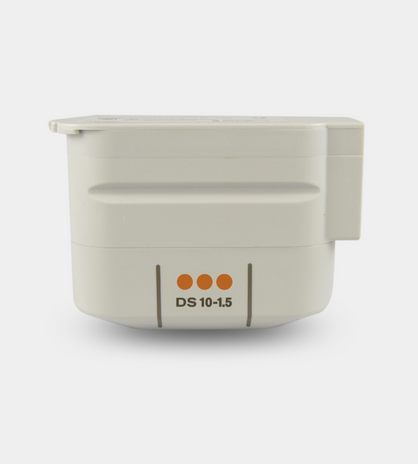
A treatment head, handpiece, tip, probe or accessory can look familiar and still be the wrong version for a particular system. Before asking for a quote, prepare enough information for the supplier to understand the item, the system it belongs to and the supply route you want reviewed.
This guide is for professional buyers preparing a sourcing request. It does not establish that a part is original, compatible, available or cleared for use in a particular country. Those questions need to be checked against the exact commercial item and destination.
First identify what you are looking for
Start by separating the complete system from the part. A request for a ‘machine head’ may refer to a removable treatment head, a cabled handpiece, a disposable tip, a probe, a connector assembly or another accessory. Use the name printed on the current item or its package whenever possible.
If the name is missing, describe the part's role without guessing its identity. For example: ‘removable treatment head from an existing system’ is more useful than assigning an unverified model name. Do not treat a similar-looking part from another system as a match.
Prepare six practical reference points
The following record is usually more useful than a long message:
| What to provide | What it helps a supplier review |
|---|---|
| Complete system photo and system model reference | Product family, visible version clues and the system context |
| Full view of the requested part | Overall geometry, housing and visible markings |
| Connector or mounting-area close-up | Physical interface, pin/contact arrangement and cable route |
| Label, package or part-number photo | Exact wording, product reference and visible lot/date fields |
| Required quantity and destination country | The commercial request and the market that must be considered |
| Sample or repeat-order purpose | Whether you are evaluating one item or describing a confirmed repeat requirement |
Take photos in even light, without filters or strong reflections. Keep the full item in at least one image. If the requested item is damaged, include a clear damage photo, but do not let a damage close-up replace the label and connector views.
State the supply route you want reviewed
Three purchasing routes solve different problems and must not be merged in one vague request:
- Original-product route: the exact product identity and available supporting information must be reviewed for the item being quoted.
- Compatible-alternative route: a physical and functional match must be assessed for the specific system and part reference; similarity in appearance is not enough.
- Custom-development route: the buyer needs a repeatable requirement, reference information and a clear commercial problem for a technical review.
Tell the supplier which route you are considering. A quotation should make that route clear rather than using a brand name to imply original status, compatibility or authorisation.
Use a sample as a commercial checkpoint
MIEING can discuss small sample orders in principle. A sample is useful when the buyer needs to compare the physical item with the reference used in the request before discussing repeat purchasing.
When the sample arrives, record:
- the item’s visible product reference and label wording;
- the connector, contacts, cable or mounting interface;
- the housing, dimensions and supplied configuration;
- the package condition and any visible accompanying documentation; and
- any difference from the agreed quotation, with clear photos.
The sample confirms only the commercial item received for review. It does not automatically prove compatibility, clinical performance, future availability, product authorisation or the status of a later shipment. Follow the applicable manufacturer instructions and local requirements for the exact item.
Build a repeat-order record after the item is accepted
Do not allow a later order to rely on a short phrase such as ‘face tip’ or ‘same head.’ Keep a concise record of the accepted product photos, full item name, system reference, visible label or package reference, quantity, packaging requirement, destination country and the supply route agreed for that request.
If the system, connector, configuration or product reference changes, treat it as a fresh identification review. A previously accepted sample does not automatically transfer to a different version.
For branded or model-specific requests, use the relevant buyer guide once available: a model-specific transducer identification guide, a 25-pin tip identification checklist or a model-specific XERF tip request.
What to write in the first enquiry
The website form is intentionally short. In the message field, include the system reference, the requested part description, available photos or label wording, quantity, destination country and whether you want a sample or a repeat-order discussion.
If the information is not enough for a practical review, MIEING may request additional photographs or reference details. This is preferable to making a compatibility assumption from one image.
Discuss your requirement
Tell us what you need and include the product references available to you. MIEING will review the exact request and continue the discussion by email or WhatsApp.
Discuss your requirement